
Dolmabahçe Mosque: A Valide Sultan's Jewel on the Bosphorus
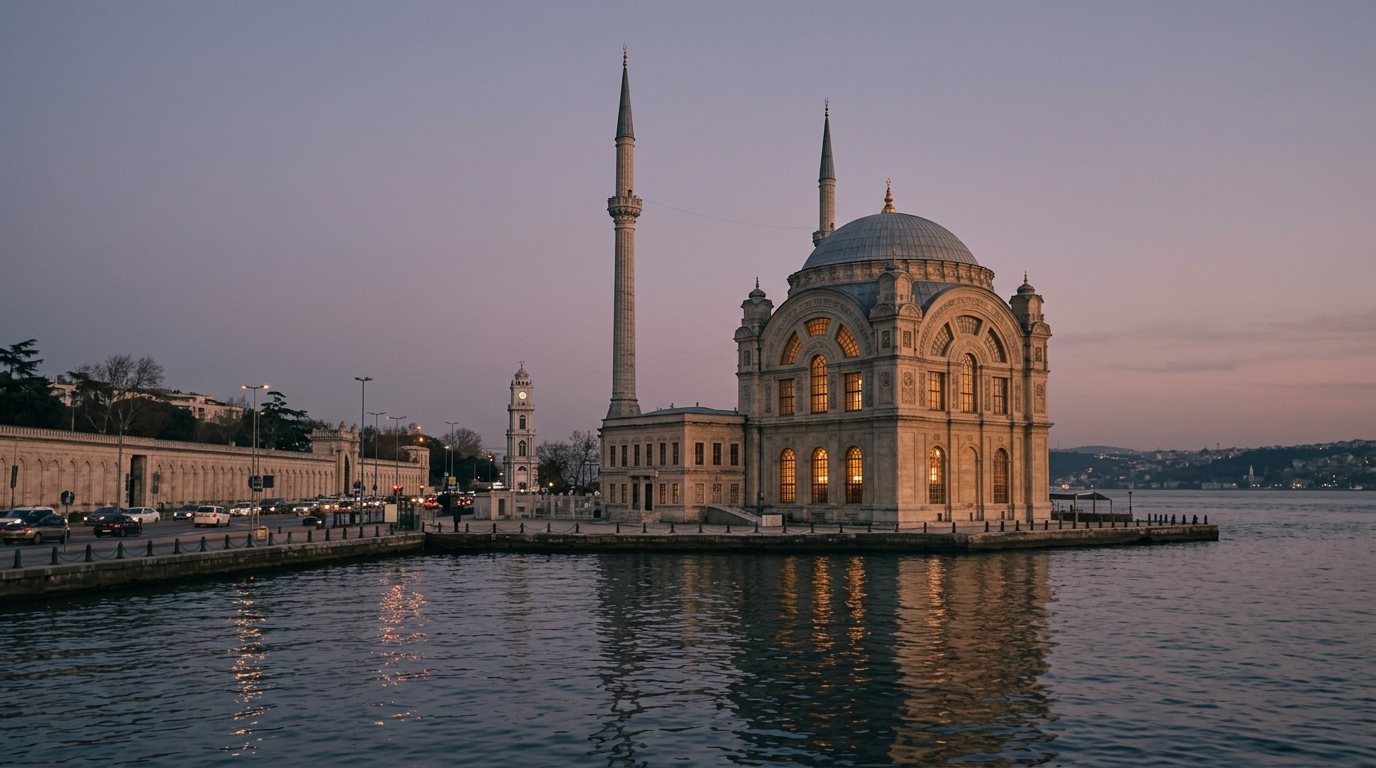
Dolmabahçe Mosque is the ornate little imperial mosque on the Bosphorus shore beside the palace — commissioned by Bezmiâlem Valide Sultan, the sultan’s mother, finished in 1855, and designed by the same Balyan family of architects who built Dolmabahçe itself. Most people photograph it from the ferry without knowing what they are looking at: one of the most original mosques of the entire Ottoman era, wearing the empire’s last architectural style at its most confident.
It is also the most generous stop in the whole Dolmabahçe quarter: a working mosque, free to enter, standing right where the palace, the clock tower and the waterfront meet.
A mother’s commission
The mosque is officially the Bezm-i Âlem Valide Sultan Mosque, and the name is the story. Bezmiâlem was the mother of Sultan Abdülmecid I — the valide sultan, the most powerful woman in the empire — and a prolific builder of public works: hospitals, schools, fountains, bridges. As her son raised his great palace on the reclaimed shore, she commissioned a mosque to stand beside it at the water’s edge.
She never saw it finished. Bezmiâlem died in 1853, and Abdülmecid completed the mosque in her name in 1855, a year before the court moved into the palace next door. Mother and son thus bracket the ensemble: his palace, her mosque, one shoreline.
The Balyans in miniature
The design is credited to the Balyan atelier — Garabet Balyan with his son Nigoğayos, the same partnership behind the palace’s architecture — and the mosque reads as the palace’s concentrated essence. The same pale stone, the same baroque confidence, but compressed into a single domed cube where every gesture counts:
- The windows are the architecture. Two tiers of enormous round-arched windows dissolve the walls almost entirely — contemporaries joked the mosque had more glass than stone. Inside, the prayer hall floats in Bosphorus light in a way no classical-era mosque attempts; the sea reflects onto the dome on bright mornings.
- The minarets are pure 19th century: a single slender pair, fluted like classical columns, rising from bases carved as ornate as the palace gates.
- The dome sits on visible arcs, its drum wrapped with the curving buttresses the Balyans loved, closer to European baroque church silhouettes than to Sinan’s Istanbul — and yet the plan beneath is a perfectly traditional single-hall mosque.
Architectural historians treat it as a key work of the late-Ottoman waterfront style. If the palace shows what the Balyans could do with 285 rooms, the mosque shows what they could do with one.
A building that kept the empire’s hours
The mosque was the palace quarter’s spiritual anchor: the household prayed here, and the clock tower that Abdülhamid II later raised between mosque and palace gate kept — fittingly — both prayer times and court appointments. After the empire fell, the building had a strange interlude: for some years in the mid-20th century it housed the Naval Museum before that institution moved up the shore to Beşiktaş, and the mosque returned to worship.
Today it is an active neighbourhood mosque with one of the most dramatic congregational views in Islam: doors open to the Bosphorus, ferries crossing behind the imam.
Stepping inside
Visiting follows the standard etiquette of any working Istanbul mosque, and no ticket is involved: entry is free outside the five daily prayer times, shoes come off at the door, shoulders and knees should be covered, and women cover their hair (a scarf in your bag is enough). Photography without flash is generally welcome — but not of people praying. Ten quiet minutes inside, watching water-light move across the dome, is one of the best free experiences in the quarter.
If you want the full story while you stand there, the ticket site for this POI pair offers a dedicated Dolmabahçe Mosque audio guide — a narrated companion covering Bezmiâlem, the Balyans and the building’s details at your own pace.
The mosque in the quarter
Give it its context and it gets better. The mosque anchors the southern end of the palace shoreline: from its steps, the clock tower rises a minute’s walk north, the palace’s Treasury Gate opens beyond it, and the gardens run behind the sea wall toward Beşiktaş. Seen from a ferry out on the strait — the view its architects composed it for — mosque, tower and palace line up as a single 19th-century ensemble, the empire’s last great building project reading left to right.
For how the whole ensemble came to be, start with the history of the palace; for the wider neighbourhood — the fish market, the stadium, the tea gardens — take our walk around the Beşiktaş waterfront. And if the palace interior is on your list for the same day, it is ticketed — arranging entry in advance spares you the queue at the gate the mosque has been watching for 170 years.