
The Dolmabahçe Gardens: An Empire's Backyard on the Bosphorus
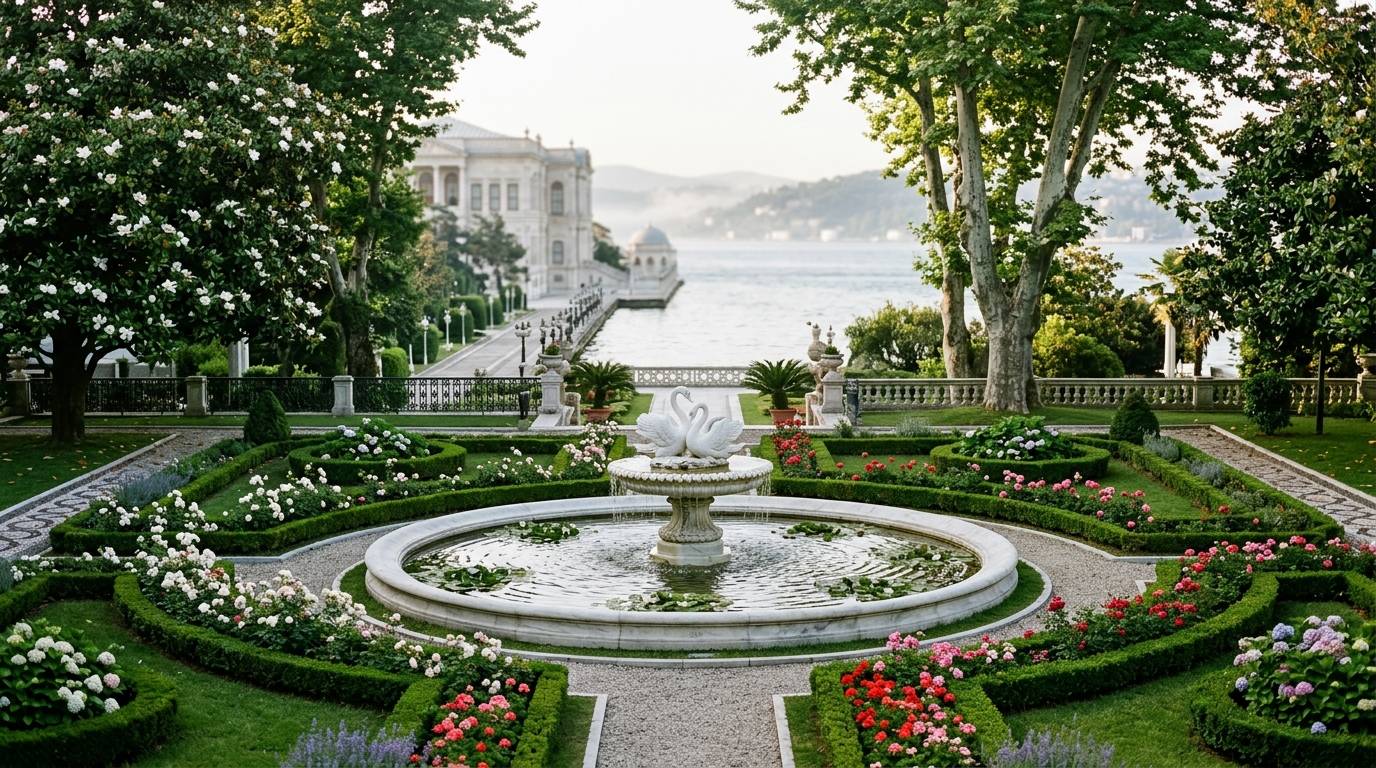
The gardens came first. Two centuries before a single stone of the palace was laid, Ottoman engineers filled in a shallow Bosphorus cove to make an imperial garden — the dolma bahçe, literally the “filled-in garden” — and it is the garden, not the building, that gave the palace, the mosque, the quarter and this website their name. What surrounds the palace today is the descendant of that reclaimed ground: a sequence of formal 19th-century gardens between the sea wall and the city, with a swan fountain at their heart.
This page is about the grounds as a place — their story and their layout. (The gardens sit inside the ticketed palace grounds; one practical note on that at the end.)
A garden built on the sea
The story starts with landfill. In the early 1600s — the reign of Ahmed I, continued under Osman II — the dynasty had the small bay below Beşiktaş filled with earth and rubble, extending the shore and creating a hasbahçe, a private imperial garden, on the new ground. For two hundred years it served as a royal pleasure ground and the forecourt of a series of wooden waterfront palaces, appearing in engravings as parterres and pavilions between the water and the hillside.
So when Abdülmecid I chose the site for his great stone palace in 1843, he was not breaking new ground at all: he was building in the garden — and the garden absorbed the palace, not the other way round. It remains the oldest continuously tended piece of the whole ensemble.
The layout: rooms without ceilings
The Balyans planned the grounds as the palace’s outdoor floor plan, and the logic mirrors the building’s own zones — each wing gets the garden its life required:
- The Selamlık (Hasbahçe) garden — the showpiece, fronting the state wing. A strict formal parterre in the European manner around the famous swan fountain, its cast swans spouting inside a round basin, with box hedging, seasonal bedding and specimen trees composed against the marble facade. This is the garden of arrivals, designed to be crossed by ambassadors.
- The Harem garden — behind the private wing: looser, shadier, more domestic, where the household actually lived outdoors. It keeps a gentler register to this day.
- The Kuşluk — the Bird Pavilion garden — the most charming survival: the palace kept an aviary, and exotic birds were bred and kept here for the court’s pleasure. Birdsong is still part of the grounds.
- The Camlı Köşk (glasshouse) — a 19th-century crystal-and-iron conservatory on the landward edge: the Industrial Revolution’s contribution to Ottoman gardening, built for delicate plants and winter blooms.
Threading them together runs the 600-metre quay garden along the sea wall — a linear promenade with the best free-moving views any palace garden in Europe can offer: tankers, ferries and fishing boats sliding past the parterres.
Trees from four continents
Nineteenth-century royal gardening was a collector’s sport, and Dolmabahçe played it seriously: magnolias, horse chestnuts, lindens, planes, palms, Japanese pagoda trees — species gathered from Europe, Asia and the Americas, many now monumental at 150-plus years old. The gardeners of the National Palaces administration maintain the historic character: carpet-bedding renewed by season, the swan fountain’s basin kept immaculate, the great trees surveyed and propped like the antiques they are.
Spring (magnolias, tulips — the Ottoman flower, fittingly) and late October (the chestnuts turning against the white facade) are the grounds’ two glory seasons. High summer belongs to the shade of the Harem garden; winter to the glasshouse idea — a garden that refuses the calendar.
What the gardens are for
It is tempting to treat palace gardens as decoration, but Dolmabahçe’s grounds did real work. They were the palace’s climate system, cooling the sea air before it reached the state rooms through those enormous windows. They were its privacy apparatus — the walls and planting screened the dynasty’s family life from a city pressing close on three sides. And they were its stage management: every important visitor experienced the palace first as a garden crossing, the building revealed gradually between trees, exactly as the architects composed the approach.
The republic kept all three functions and added a fourth: remembrance. The grounds around Room 71’s wing carry a particular quiet, and on 10 November the garden paths hold the queues of visitors come to stand at the room where Atatürk died.
Visiting the grounds
One practical honesty, because the question is common: the gardens are not a free public park. They lie inside the palace’s walled and gated grounds, so entering them is ticketed — garden access comes with a palace visit, and the current ticket options are laid out on the ticket site. (The genuinely free part of the ensemble is outside the walls: the square with the clock tower and the mosque by the ferry landing.)
Once inside, give the grounds their own half hour rather than treating them as a corridor to the door: swan fountain, quay wall, Bird Pavilion, glasshouse — the filled-in garden that started everything, still doing its job four centuries on. For the wider green shoreline beyond the walls — the tea gardens and waterfront of the quarter — see our walk around the Beşiktaş waterfront.